 English
 Pусский
 Español
Next: How to Choose a Flexo Printing Machine for Corrugated Boxes: A Practical Guide
Paper bag manufacturing is undergoing a fundamental shift. The global paper bag market was valued at approximately USD 7.8 billion in 2025 and is projected to grow at a compound annual growth rate of 4.6%, reaching USD 11.7 billion by 2034. This expansion is driven by tightening single-use plastic regulations, rising consumer preference for sustainable packaging, and the growing retail and e-commerce sectors worldwide.
For packaging converters considering entry into or expansion within the paper bag market, the equipment decision is critical. Among the available technologies, sleeve-type flexographic printing machines have gained particular attention. But the question remains: does the sleeve approach deliver sufficient operational and financial value to justify its adoption for paper bag production? This article provides a structured evaluation framework.
To assess whether sleeve technology is worthwhile, it helps to understand what distinguishes it from conventional approaches.
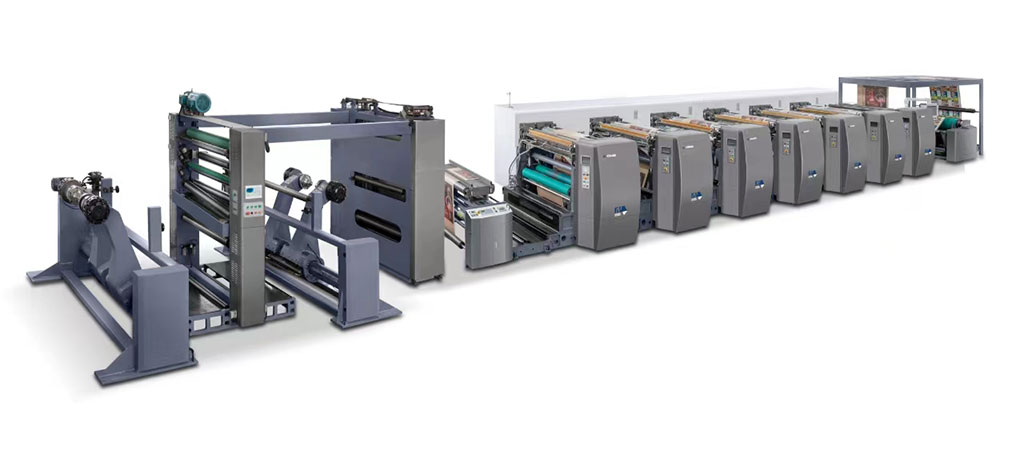
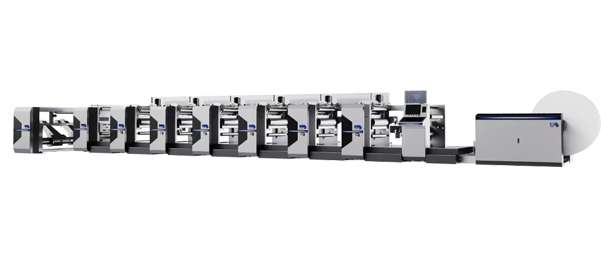
The sleeve mechanism uses lightweight, air-assisted cylinders that slide onto a common mandrel. One operator can swap an entire print repeat in under two minutes — no heavy shafts, no bearing realignment, no wrenches. FENGMING's sleeve-type machines incorporate double sleeves on each printing unit, paired with SIEMENS servo control systems for intelligent automatic color registration.
What this means for paper bag production:
| Aspect | Sleeve-Type Flexo | Conventional Petal-Type Flexo |
|---|---|---|
| Typical changeover time | ~12 minutes | ~34 minutes |
| Tools required | None | Wrenches, torque gauge |
| Operator skill needed | Lower | Higher |
| Risk of cylinder damage | Very low | Moderate |
| Repeat length flexibility | Unlimited | Gear-limited |
A packaging plant case study showed that a sleeve-equipped line can run six job changes in the time a petal line completes two. For paper bag manufacturers handling diverse order sizes — from retail shopping bags to food-grade bakery bags to custom promotional bags — this difference directly impacts throughput and profitability.
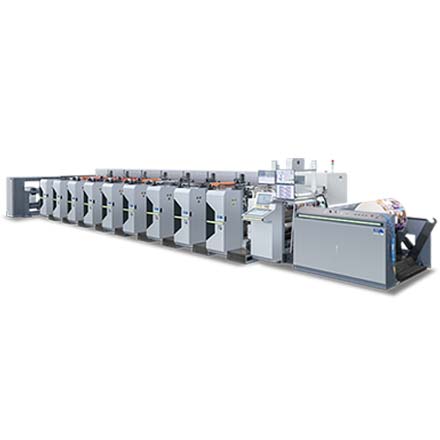
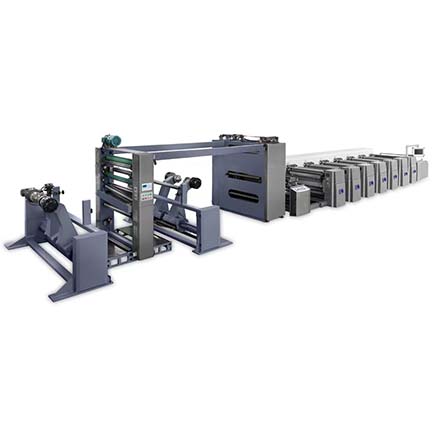
To understand how these technical principles translate into specific machine configurations for different production volumes, you can explore the range of sleeve-type flexo printing machine designs available for various paper packaging applications.
This is where sleeve technology delivers its most tangible value. The FM-TS-650 sleeve flexographic printing machine, for example, achieves plate changes within 30 minutes — a capability specifically suited for small-batch, multi-SKU orders. FENGMING's full-servo sleeve-type models support speeds up to 350 meters per minute.
For a paper bag operation running more than four job changes per shift, the accumulated time savings become significant. Consider: if each changeover saves 22 minutes (34 vs. 12 minutes), and you run five changes per day, that's nearly two hours of additional production time daily — translating directly to more bags produced, more orders fulfilled, and greater revenue capacity.
Paper bags are increasingly vehicles for brand expression. The custom printed paper bags market is driven by demand for premium, aesthetically appealing designs. This means print quality is non-negotiable.
Sleeve systems benefit from a perfectly concentric mandrel, with runout typically below 0.01 mm across the entire width — translating to sharper halftones and less dot gain. FENGMING's sleeve-type machines achieve registration accuracy of ±0.1 mm at constant speed. For paper bag printing, this means crisp logos, consistent color reproduction across long runs, and reliable gradient transitions — all essential for brand clients who demand visual perfection on retail shelves.
Paper bags are produced from diverse substrates — kraft paper, white kraft, recycled paper, coated paper, specialty paper. FENGMING's sleeve-type flexo machines process various paper materials including copy paper (80–400 gsm), art paper, paperboard, kraft paper, coating paper, and composing paper. The applicable material weight range extends from 30 gsm to 350 gsm.
This broad compatibility means one machine can handle lightweight tissue-style shopping bags through to heavy-duty multi-wall paper sacks — offering operational flexibility that many paper bag producers require.
Sustainability is not just a market trend — it's a regulatory reality. Paper bag manufacturers exporting to markets like the EU must meet REACH certification and strict VOC emission requirements. Sleeve-type flexo machines support both water-based and UV inks, with operators able to select ink types or mix them according to job requirements. The dual-ink system allows one-button switching between water-based and UV inks, with VOC emissions meeting EU standards.
This capability is increasingly critical. Traditional solvent-based ink solutions cannot meet tightening environmental regulations, and converters who invest in compliant technology gain a competitive advantage in export markets.
A flexo press rarely runs in isolation — it often needs to integrate with downstream processes (die-cutting, slitting, stacking) to form a complete paper bag production line. Sleeve-type machines with full servo drive and open control architecture provide greater flexibility for future line expansion.
If your business involves multiple production lines and complex downstream integration, choosing a press platform with servo drives and digital inspection capabilities will provide greater flexibility for future expansion. If your production process is relatively independent and downstream steps are simple, the press's inherent stability may be the dominant consideration.
If you operate in specialized segments like medical or food-grade packaging, you may benefit from reviewing application-specific configuration guides that address the unique compliance requirements of those industries.
A paper bag converter serving multiple retail brands and food service chains processes 4–6 different jobs per day, each ranging from a few thousand to tens of thousands of bags. Order types vary widely — from small boutique shopping bags with intricate logos to large-volume bakery bags with simple one-color branding.
In this scenario, changeover efficiency is the primary variable determining equipment profitability. Sleeve-type technology allows operators to prepare the next job's sleeves while the current order is still running, cutting changeover time from over an hour with conventional setups to 10–15 minutes. That means more job batches can be completed in the same shift, significantly improving equipment utilization and throughput.
This type of operation also involves frequent substrate changes, placing a premium on substrate versatility. Such application scenarios typically call for technical solutions that adapt to a diverse order mix — a category worth examining in more detail.
A manufacturer of standard shopping bags for major retail chains produces continuous runs of hundreds of thousands of bags per order. Changeover frequency is very low — perhaps one or two changes per week — but run-to-run consistency is extremely stringent. Any minor color variation across a multi-day run could result in entire batches being rejected by the retailer.
In this scenario, the mechanical stability provided by petal-type designs may be more relevant. The press maintains consistent print quality even after running continuously for days, meaning lower quality risk and higher yield. However, even for long-run operations, the sleeve system's ability to handle different substrates and repeat lengths without gear changes offers a level of flexibility that can accommodate occasional short-run custom orders without dedicated equipment.
Reviewing the five decision dimensions above, choosing sleeve-type flexo technology for paper bag production ultimately answers three questions:
Does your order mix lean toward frequent changeovers and high variety, or long runs and low changeover frequency?
Does your business growth depend on shorter lead times and higher equipment utilization?
What requirements do your main substrate types and export markets impose on print quality and environmental compliance?
For paper bag converters that compete on short lead times and high product variety, the changeover efficiency of sleeve-type technology often directly translates into higher equipment utilization, enabling the business to take on a wider range of order types. For production lines focused on long runs, high volume, and strict consistency, the mechanical stability of well-engineered flexo platforms remains important — and sleeve systems increasingly offer that stability alongside their flexibility advantages.
Once you have clarified these key decision factors — required speed, substrate range, changeover frequency, and compliance needs — comparing the specific specifications of available options becomes the next logical step. You can review equipment solutions designed for high-changeover environments or high-stability solutions for long runs, and then evaluate the specific models that align with your business stage.
How to Evaluate Flexographic Printing Machine Automation Level for Your Production Line
Flexo Printing Substrate Compatibility Guide: Paper, Film, and Beyond
Understanding Total Cost of Ownership in Flexo Equipment Selection
Green Printing Transition: What Packaging Manufacturers Need to Know in 2025
Short-Run vs. Long-Run Flexo Printing: Which Machine Configuration Maximizes Your Profit?
This article is part of FENGMING's technical content library. No direct sales or pricing information is included. All technical discussions aim to help you make informed purchasing decisions.
GET A QUOTE