When you face two different flexographic printing technology solutions, the real question is rarely “which model is better.” Instead, it is “which technical path better suits my current business stage and future plans.” FM-TS-650 Sleeve‑type and FM-CS1020 petal‑type represent two fundamentally different logics for plate cylinder mounting and job changeover. They differ significantly in changeover efficiency, running stability, return on investment, and ability to handle short‑run, multi‑SKU orders. This article breaks down the core differences and application boundaries of the two technologies, providing an actionable decision framework.
Before diving into comparisons, it is essential to clarify the mechanical distinction between FM-TS-650 sleeve‑type and FM-CS1020 petal‑type designs — because that distinction directly determines their real‑world production characteristics.
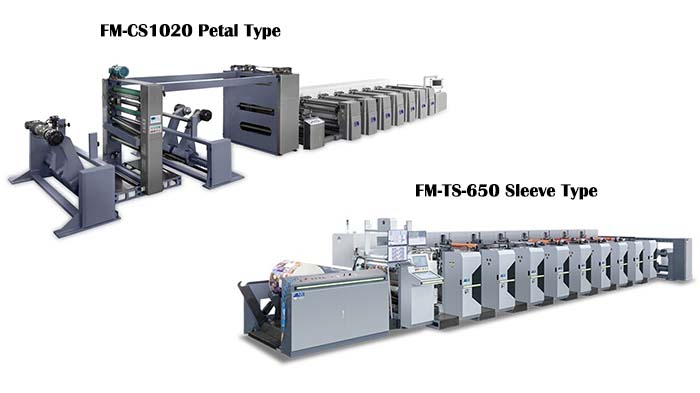
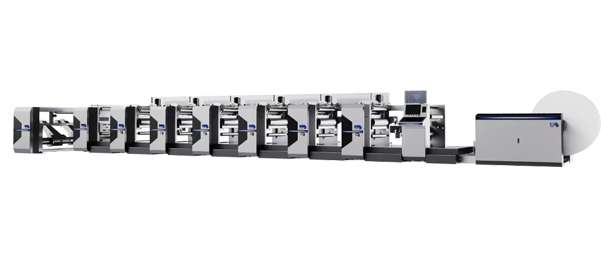
FM-TS-650 Sleeve‑type technology uses lightweight sleeve structures for printing plates, with plate mounting and dismounting powered by air shafts. For production environments that require frequent job changes, this means dramatically shorter changeover times. According to industry technical literature, sleeve‑based flexo presses can reduce per‑color changeover time to 3–4 minutes, compared to 15–18 minutes for conventional systems. This efficiency gain directly translates into economic value for flexible packaging producers handling many SKUs and short runs. Moreover, the sleeve design eliminates the repeat‑length restrictions imposed by traditional gear pitch, and full servo drive means the print repeat length is no longer limited by conventional gear pitch specifications — significantly expanding the range of jobs the press can handle.
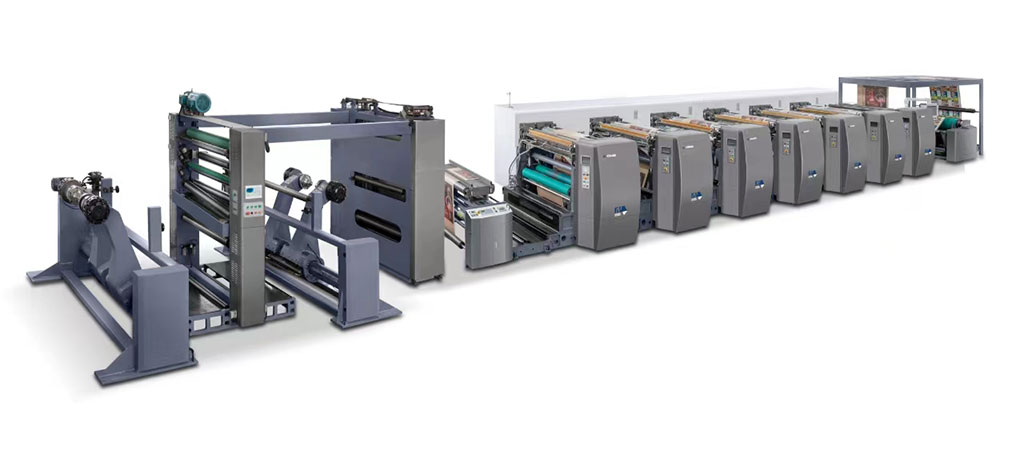
FM-CS1020 Petal‑type technology follows a different design philosophy. The plate cylinder is locked mechanically. Although changeover takes longer, the design provides extremely stable printing pressure at high running speeds. The advantage is that when a single order runs continuously for hours or even days, the mechanical lock maintains consistent pressure distribution, ensuring uniform color density and dot reproduction across the entire batch.
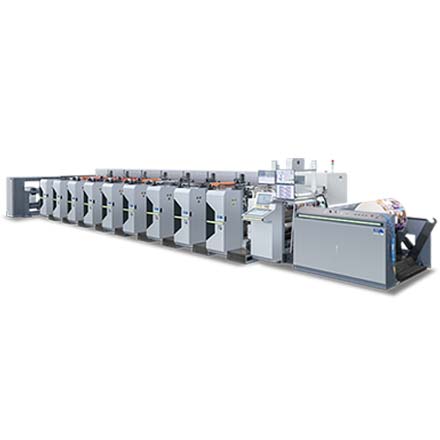
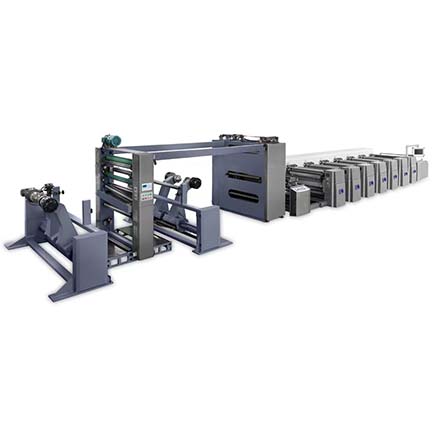
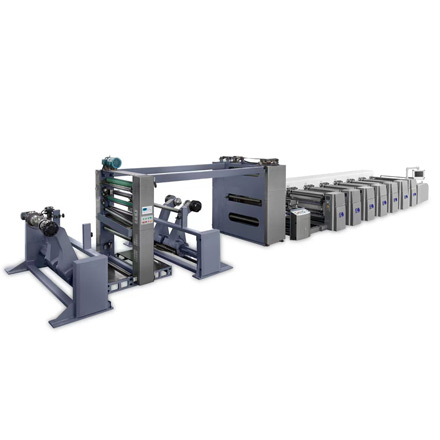
Once you understand these technical principles, you can further explore how different technology paths are embodied in actual flexo press designs, so you can better match them to your production scenarios.
Translating technical specifications into actual business value is the core of a rational decision. The following five dimensions cover the full decision chain, from order mix to environmental compliance.
In equipment selection, “changeover time” is often underestimated but has a profound impact on profit. The core value of FM-TS-650 sleeve‑type technology lies in off‑press make‑ready — operators can prepare the next job’s sleeves while the current order is still running. The actual press downtime is reduced to the few minutes needed to physically mount and dismount the sleeves.
If your business is dominated by short‑run, multi‑SKU orders, the changeover efficiency of FM-TS-650 sleeve‑type technology directly translates into higher equipment utilization and shorter lead times. Reducing changeover time from 15–18 minutes to 3–4 minutes means you can complete more job batches per shift, significantly increasing throughput.
If your business is dominated by long‑run, low‑changeover‑frequency orders, the petal‑type’s mechanical stability often becomes the higher priority.
The two technologies have different strengths in substrate handling. The sleeve design enables handling a wide range of substrates, from lightweight films to heavier paperboard. The lightweight sleeve material is more tension‑friendly for film‑type substrates, and register accuracy on easily stretched materials such as BOPP and PET is reliable.
The petal‑type’s advantage appears in pressure stability at high running speeds. A well‑tuned petal‑type press can achieve a register accuracy of ±0.1 mm at constant speed — comparable to a high‑spec sleeve‑type configuration. However, for substrate range, petal‑type designs are traditionally more mature for paper and paperboard materials in the 80–400 gsm range.
Trends in 2025 show that automation is becoming a critical decision dimension in flexo equipment selection. At Labelexpo Europe 2025, industry observers noted that “Industry 4.0” automation has fully penetrated flexo printing, including full servo drives, AI‑driven register systems, and end‑to‑end job workflow automation.
The two technology types can be equipped with different automation packages. FM-TS-650 Sleeve‑type machines often include more comprehensive automation features: CCD automatic register control, full servo drive, and digital full inspection. FM-CS1020 Petal‑type machines emphasize automatic pre‑register functions and PLC control, offering operational convenience.
The core judgment logic: if your factory faces a shortage of skilled technicians or you want to reduce dependence on highly skilled operators, a higher level of automation will deliver more predictable production stability.
Flexographic printing is becoming a key technical path in the green printing transition. According to a 2025 report by the Flexographic Printing Branch of the China Printing Association, flexo printing is gaining attention because of its green credentials, process flexibility, and high production efficiency. Research indicates that flexo printing using water‑washable plates and water‑based inks can reduce carbon emissions by up to 35 times compared to traditional solvent‑based gravure printing.
Both technologies support water‑based and UV inks. However, sleeve‑type presses generally offer greater ink versatility, allowing users to select ink types or mix them based on the print job’s requirements, adapting to a wider range of printing patterns and substrates. This is an increasingly important variable when export markets impose strict regulations such as EU REACH.
A flexo press rarely operates in isolation — it often needs to integrate with downstream processes (die‑cutting, slitting, stacking) to form a complete production line. Trends in 2025 show that flexo is achieving higher levels of automation integration by connecting to MIS/ERP systems.
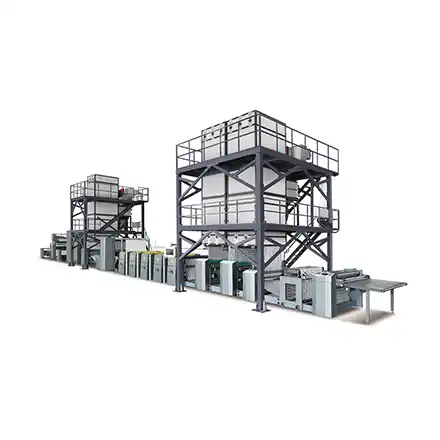
If your business involves multiple production lines and complex downstream integration (e.g., playing card production combining printing, gluing, pressing, and collecting), choosing a press platform with full servo drives and an open control architecture will provide greater flexibility for future line expansion.
If your production process is relatively independent and downstream steps are simple, the press’s inherent stability may be the dominant consideration.
(https://youtu.be/U6KEblI-Cd4?si=fAKD0F_ZxaCrAc0z)
A printing house serving multiple fast‑moving consumer goods brands processes 4–6 different jobs per day, each ranging from a few thousand meters to tens of thousands of meters. In this scenario, changeover efficiency is the primary variable determining equipment profitability. FM-TS-650 Sleeve‑type technology allows operators to prepare the next job’s sleeves while the current order is still running, cutting changeover time from over an hour with conventional setups to 10–15 minutes. That means more job batches can be completed in the same 8‑hour shift, significantly improving equipment utilization and throughput.
This type of operation also involves frequent substrate changes (from BOPP film to paper to laminates), placing a premium on substrate versatility. Such application scenarios typically call for technical solutions that adapt to a diverse order mix — a category worth examining in more detail.
A manufacturer of sterilizable medical packaging reels produces continuous print runs of hundreds of thousands of meters per order. Changeover frequency is very low, but run‑to‑run consistency is extremely stringent — any minor pressure fluctuation can cause color inconsistency across the batch, leading to entire batch rejection. In this scenario, the pressure stability provided by the petal‑type’s mechanical lock becomes decisive. The press maintains consistent print quality even after running continuously for days, meaning lower quality risk and higher yield.
If you are interested in the special compliance requirements for medical packaging printing, you can refer to the technical standards guide for medical‑grade packaging printing, which details additional requirements for printing equipment in this sector.
Reviewing the five decision dimensions above, choosing between FM-TS-650 sleeve‑type and FM-CS1020 petal‑type technology ultimately answers three questions:
Does your order mix lean toward frequent changeovers and high variety, or long runs and low changeover frequency?
Does your business growth depend on shorter lead times and higher equipment utilization?
What requirements do your main substrate types and export markets impose on print stability and environmental compliance?
For packaging printers that compete on short lead times and high product variety, the changeover efficiency of FM-TS-650 sleeve‑type technology often directly translates into higher equipment utilization, enabling the business to take on a wider range of order types. For production lines focused on long runs, high volume, and strict consistency, the mechanical stability of petal‑type technology remains an irreplaceable advantage.
Once you have clarified your preferred technology direction, the next logical step is to compare specific models on speed, width, color deck configuration, and other specifications to match your actual capacity needs. You can review equipment solutions designed for high‑changeover environments or high‑stability solutions for long runs, and then evaluate the specific models that align with your business stage.
How to Evaluate Flexographic Printing Machine Automation Level for Your Production Line
Flexo Printing Substrate Compatibility Guide: Paper, Film, and Beyond
Understanding Total Cost of Ownership in Flexo Equipment Selection
Green Printing Transition: What Packaging Manufacturers Need to Know in 2025
Short‑Run vs. Long‑Run Flexo Printing: Which Machine Configuration Maximizes Your Profit?
This article is part of FENGMING’s technical content library. No direct sales or pricing information is included. All technical discussions aim to help you make informed purchasing decisions.
GET A QUOTE

 English
 Pусский
 Español